
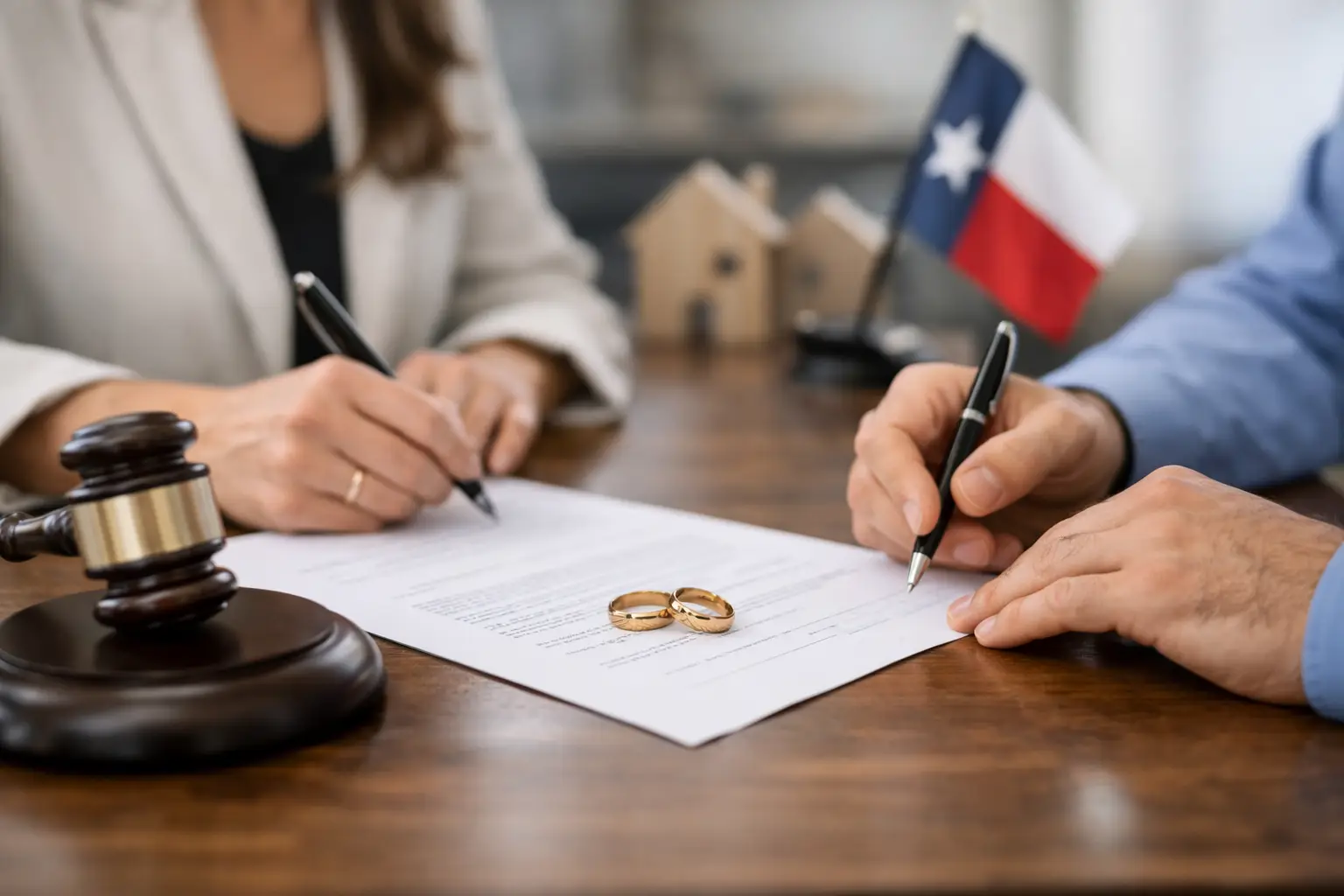
If you are close to finishing a divorce, one question tends to come up at exactly the moment people are ready to be done with paperwork: do both spouses sign decree documents, or is one signature enough? In Texas, the answer depends on the type of divorce, whether the case is agreed, and what stage of the process you are in. That uncertainty is common, especially for people handling an uncontested divorce who want everything done correctly the first time.
Do both spouses sign decree papers in Texas?
In many uncontested Texas divorces, both spouses do sign the Final Decree of Divorce. That is often the cleanest path because it shows the parties agree to the terms written in the decree. But not every divorce requires both signatures on the decree itself.
The most important signature is the judge’s. A divorce is not final because one spouse signed paperwork or even because both spouses signed it. It becomes final when the judge signs the Final Decree of Divorce. That is the signature that makes the order legally effective.
So if you are asking, do both spouses sign decree paperwork in every case, the short answer is no. In an agreed divorce, both signatures are common and helpful. In a contested divorce, one spouse may refuse to sign, and the court can still finalize the case if proper procedures were followed.
What the Final Decree of Divorce actually does
The decree is the court order that wraps up the divorce. It states who gets what property, whether debts are divided, whether either spouse will change a name, and if children are involved, it covers conservatorship, possession schedules, child support, medical support, and other required terms.
Because the decree is the final order, accuracy matters. A missing detail can cause problems later with refinancing a home, transferring a vehicle title, dividing retirement funds, or following the parenting schedule. That is one reason people often focus so much on signatures. Signing feels like the finish line. Legally, though, the decree has to be complete, approved, and signed by the judge.
When both spouses usually sign
In an uncontested divorce, both spouses often sign because they have reached an agreement on all terms. This may happen after the petition is filed, after the waiting period has run, and once the final decree has been prepared.
When both spouses sign, it generally signals that neither side plans to object to the wording. That can make prove-up or final submission much smoother. Judges and clerks want to see that the paperwork is consistent and that the agreement is clear.
That said, the exact handling can vary by county and by the court’s procedures. Some courts are comfortable with one spouse presenting an agreed decree signed by both parties. Others may have specific formatting or filing preferences. The underlying rule stays the same: the judge’s signature is what finalizes the divorce.
When only one spouse signs
There are situations where only one spouse signs the decree before it goes to the judge. For example, if the case is not fully agreed, the spouse presenting the order may sign it as “approved as to form” or sign because they are the party submitting it after a hearing or trial.
A spouse also might refuse to sign simply out of frustration, even when the terms were already discussed. That refusal does not automatically stop the divorce. If the court has authority to move forward and the legal requirements were met, the judge can still sign a final decree.
This is where people sometimes get tripped up. They assume no signature from the other spouse means no divorce. That is not how Texas courts work. If one party has been properly served or has filed an answer or waiver, and the case is ready for finalization, the court can proceed under the applicable rules.
Does a waiver replace a signature on the decree?
Sometimes, yes in a practical sense, but not exactly in the way people think. A Waiver of Service is not the same as signing the decree. It usually means the responding spouse is acknowledging receipt of the case and waiving formal service by a process server or sheriff. It does not necessarily mean they agree with every term in the final decree.
There is also a document sometimes called a waiver of further notice or an agreed set of papers that may reflect broader cooperation. Even then, it is important to read the language carefully. One document may waive service. Another may confirm agreement. Another may approve the final decree. They serve different purposes.
In many simple agreed divorces, spouses sign both a waiver and the decree. But one should not be treated as an automatic substitute for the other without reviewing what the document actually says.
If your spouse will not sign, is the case still uncontested?
It depends on why they will not sign. If both of you agree on every issue but your spouse is slow to return paperwork, the divorce may still be functionally uncontested. It may just need follow-up and clean document handling.
If your spouse now disagrees with property division, parenting terms, support, or debt allocation, then the case may no longer be uncontested. At that point, the missing signature is a symptom of a larger problem, not the problem itself.
This distinction matters. A simple delay can often be solved by correcting paperwork, clarifying terms, or coordinating signatures properly. A true disagreement may require negotiation, revisions, mediation, or court involvement.
Common reasons decree signatures get delayed
Most signature delays are not dramatic. They usually come from confusion, not conflict. A spouse may not understand what they are signing. The decree may include terms different from what was discussed. One party may worry that signing too early gives up rights. Sometimes the notary requirements, scheduling, or simple procrastination get in the way.
Another common issue is drafting. If the decree is incomplete, inconsistent with earlier agreements, or missing required language for children or property, the other spouse may hesitate to sign for good reason. In that situation, slowing down is better than forcing a rushed signature.
That is especially true when retirement accounts, real estate, or parenting schedules are involved. The cleaner the decree, the fewer problems later.
Practical steps if you are trying to finalize an agreed divorce
If your goal is an uncontested divorce, the best approach is to treat the decree as the central document, not the last-minute form. Make sure both spouses understand the terms before anyone signs. Confirm names, addresses, dates, property descriptions, and child-related provisions are accurate. If one spouse is expected to sign, send the final version, not a draft that is still changing.
It also helps to be realistic about timing. People often think the hard part is deciding to divorce, and that once an agreement is reached, the paperwork will be quick. Sometimes it is. But finalizing the decree still requires attention to detail, proper signatures where needed, and court approval.
For Texas couples using an affordable uncontested process, guided support can make this stage much easier. Services like Ready Texas Divorce help people avoid the back-and-forth that happens when forms are incomplete, inconsistent, or filed in the wrong order.
A few Texas-specific points to keep in mind
Texas has a mandatory waiting period in most divorces, so even a fully agreed case cannot usually be finalized immediately after filing. Also, if the divorce involves children, the decree has to include specific language and terms that meet court requirements. That can affect how quickly signatures happen because the paperwork is more detailed.
Another point is that counties and courts may handle prove-up hearings, submissions, and final document review a little differently. The broad legal principles are statewide, but local procedure can still matter. That is why clear, Texas-specific preparation is so valuable.
The signature that matters most
People understandably focus on whether both spouses sign because it feels like proof that everything is settled. And in many agreed divorces, both signatures do help move the case forward smoothly. But the final legal act is the judge’s signature.
So if you are wondering whether one missing spouse signature automatically ends your chance to finalize, the answer is no. What matters is whether the divorce is truly agreed, whether the paperwork is correct, and whether the court has what it needs to enter the order.
If the process feels more confusing than it should, that usually means it is time for clearer guidance, not panic. The end of a divorce should feel organized and manageable, and with the right help, it often can.